Swallowed by the Jungle
IN 1961 THE AMERICAN PUBLIC WAS SHOCKED BY THE DISAPPEARANCE OF MICHAEL ROCKEFELLER OFF THE SHORES OF NETHERLANDS NEW GUINEA. ACCORDING TO THE OFFICIAL STATEMENT, HE DROWNED AT SEA; BUT SPECULATION ABOUT HIS DEATH CONTINUES TO THIS DAY—AND NOT WITHOUT REASON.
ON HIS OWN PATH
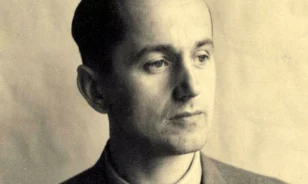
Michael Rockefeller was born in 1938 in New York. His father was businessman Nelson Rockefel - ler, who later became state governor, then the 41st Vice President of the United States. Michael was the great-grandson of John D. Rockefeller, the founder of the millionaire dynasty, whom many believe to be the richest man who ever lived. Michael was quieter, and more of an artistic soul compared to his brothers, and he didn't follow in his father's footsteps into business and politics. In 1960 he graduated with a degree in history and economics from Harvard University.
His father was a passionate art collector, and in 1954 he opened the Museum of Primitive Art in New York City. The exotic artefacts of the museum captured Michael’s imagination, and he wanted to expand the collection. Seeing his enthusiasm, his father put him on the museum's board of directors.
By this time Michael had travelled a lot of the world, having lived in Venezuela and Japan for longer periods. After he travelled with a group of anthropologists from Harvard University’s Peabody Museum to New Guinea to examine the culture of the indigenous Dani tribe, he also encountered the Asmat people, who made him even more curious. He decided to collect artwork from them.
After the end of Japanese occupation, the Dutch authorities and missionaries returned to New Guinea, and by the 1960s they had been building their influence in the region for almost a decade. Still, many of the Asmat had never seen a white man in their lives. Michael went with a group of scientists and documentarians to explore the territory of the Asmat tribes. He went to Otsjanep, one of the larger Asmat communities, where he took photos and unsuccessfully tried to buy bisj poles—ornamentally carved wooden works of art.
Michael did not give up. He found the Asmat to be a people whose way of life ran contrary to many norms of western society. Wars between villages were a regular occurrence, and the warriors often beheaded their enemies and ate their flesh. In some regions, Asmat men had homosexual relations, and during bizarre rituals, which were meant to strengthen the connection between each other, they even drank each other’s urine. “This is a wild and somehow more remote country than what I have ever seen before”— Michael wrote in his diary. The Asmat, who lived isolated from the outside world, believed that the lands beyond their island were inhabited by ghosts, and when white men arrived, they believed them to be supernatural creatures. Considering his preliminary expedition a success, Michael wrote up a detailed plan of exploration regarding the Asmat tribe, and planned to exhibit their artwork in his father’s museum. In 1961, he travelled again to New Guinea with a group of Dutch researchers.